Tuesday, February 28, 2012

Thank You, Boedecker Foundation

Today we’d like to thank The Boedecker Foundation for its generous grant to support the Bob and Judy Charles SmartHome in Boulder.

The mission of The Boedecker Foundation is to provide critical resources to nonprofit organizations that inspire positive change within diverse communities around the world. The grant from The Boedecker Foundation will help reduce the debt associated with constructing and equipping the SmartHome. This is the second time the foundation has provided a grant to Imagine!’s SmartHomes – it also provided a grant in 2009 to the Charles Family SmartHome in Longmont when the foundation was known as The Anthony H. Kruse Foundation.

This support is vital to one of Imagine!’s most ambitious projects. Over the past five years, Imagine! has built, and is currently operating, two SmartHomes. Imagine!’s SmartHomes provide permanent affordable housing for individuals with physical and developmental disabilities, and they incorporate cutting edge technologies to improve the quality and efficiency of services and supports for the residents.

As the first such homes in the nation, Imagine!’s SmartHomes are serving as a model for the future of residential care for people with developmental disabilities. They enhance the lives and independence of residents, augment the effectiveness of staff as caregivers, and provide cost and energy savings to Imagine!.

In addition, the SmartHome model has enormous potential to impact groups of people with related concerns (dementia, autism, chronic mental illness, and Alzheimer’s), as the homes are serving as living laboratories to create and test “SmartSupports” – assistive technologies that can be used in family homes to keep individuals with any kind of cognitive impairment living in their own homes for as long as possible.

To recognize The Boedecker Foundation’s support, the kitchen in the Bob and Judy Charles SmartHome will be known from now on as The Boedecker Kitchen, and will be recognized with a prominently displayed plaque.

Monday, February 27, 2012

Putting Social Media In Social Services

As Imagine! continues to explore technology as a means to serve individuals with developmental disabilities, we have been looking into using Social Media not just as a way to communicate with our stakeholders, but also as a way to deliver services. Take a look at the blog post below that originally appeared on Imagine! CEO Mark Emery’s blog about one such effort that has already paid dividends.


I have commented more than once on what I see as the great potential of Social Media for helping orgnaizations in the human services field become more efficient.

Initially, we at Imagine! looked at Social Media as great tools for better engaging our stakeholders – to keep them informed and to initiate conversations. We are also starting to see that, if creatively applied, Social Media can even help deliver services that improve the lives of some of our most vulnerable citizens.

Here’s a great example of that in action.

Zach Maple, a Behavior Therapist working for Imagine!’s Behavioral Health Services department, recently completed a case study entitled “Differential Reinforcement of Alternative Behavior from Caregiver Attention in the Social Networking Website Facebook®.” That’s a fancy way of saying that the study looked at how Facebook could be used as a tool to lessen the frequency of inappropriate attention seeking behavior.

The subject of this study was a 26-year-old individual with a diagnosis of acquired brain injury. The subject was a frequent Facebook user, and often used Facebook as a platform for making attention seeking, inappropriate posts such as threats of self harm, solicitation of sex, and inappropriate false reporting of caregivers.

Zach recruited three “confederates,” individuals who were already established as caregivers and were also friends of the subject on Facebook. The confederates were provided simple instructions on how to engage with the subject on Facebook for a period of time.

In section “BL” in the graph below, confederates were given no instructions as to how to respond to any posts by the subject to set a baseline for the study. This provided the information of how often the subject engaged in both appropriate and inappropriate behavior. Then, the confederates were asked to make responses to all appropriate posts made by the subject, but not to any of the negative, attention seeking posts (sections Tx I in the graph below). In section Tx II, the confederates refrained from making any comments on posts.

The difference that the actions of the confederates had on the behavior of the subject was astounding. Note that the graph below shows how the number of appropriate posts (the red line) rose dramatically during the study period, while the number of inappropriate, attention seeking posts (the blue line) grew at a much slower rate, and in fact seemed to have reached a plateau by the end of the study period. This change in the level of appropriate versus inappropriate posts continued even when the confederates were not responding to any posts during the time frame labeled “Tx II” below.

It is not hard to imagine that this reduction in inappropriate attention seeking behavior on Facebook could have parallels in the world outside of cyberspace. Much of what we do at Imagine! involves providing the individuals we serve with the skills and tools they need in order to engage in their communities successfully. Learning that communicating inappropriately will not be the best way to receive attention online is certainly a lesson that could be applied to an individual’s behavior offline as well. This study also shows that a few people providing an appropriate response to an appropriate behavior can make a difference.

Many thanks to Zach for developing and implementing this creative, impactful, and potentially far-reaching study. Thanks also Zach’s supervisor, Dr. Jeff Kupfer, for supporting and assisting Zach on this study.


Click on the graph to get a better view.

Friday, February 24, 2012

Support Imagine!’s REAL Nomination

Imagine! has been nominated for a Boulder Magazine REAL Award in the non-profit category. The SmartHomes project was used in the nomination as an example of Imagine!’s innovative approach to serving some of our most vulnerable citizens.

Click here to see the nomination, and please make a comment on the linked page in support of our nomination!

Thursday, February 23, 2012

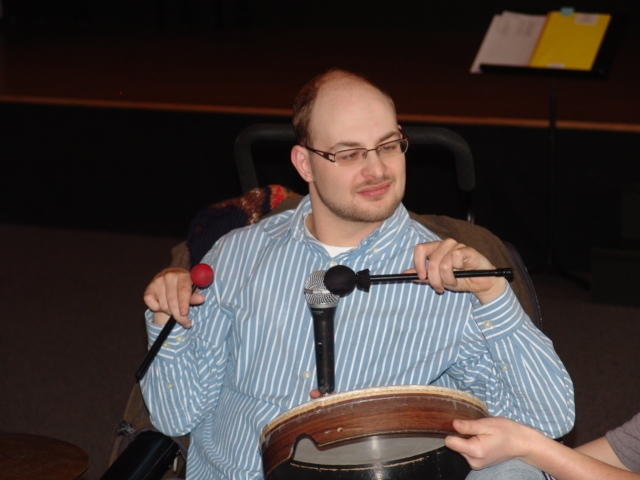
SmartHome Residents at CORE/Labor Source Adaptive Orchestra Class

Enjoy some nice photos of residents of the Charles Family SmartHome taking part in an Imagine! CORE/Labor Source Adaptive Orchestra class held at the Rocky Mountain Center for Musical Arts in Lafayette.

Wes jams on the keyboard

Sarah belts out the Beatles “Love Me Do.”


Wes playing the drums.


Sarah plays a wooden percussion instrument

Loren playing the drums and singing

Wes and Loren both on the drum

Sarah and Amanda (the music therapist)


Wes smiles after choosing an elephant to be on Old McDonald’s Farm

Wednesday, February 22, 2012

SmartHome Staff Members Collaborate With Local High School

SmartHome staffers are collaborating with students from Skyline High School in Longmont to create tech projects and iPad apps for Imagine!’s Dayspring department, which serves children from ages birth to three with developmental delays and disabilities.

This is great example of harnessing the power of community collaboration to use what we’ve learned about technology at our SmartHomes to serve more and more individuals and families.

Sterling Wind, Alex Andrews, Kevin Harding and Greg Wellems attended a recent Dayspring staff meeting to share information on the collaboration between Imagine! and Skyline. They began brainstorming some projects/apps for students to consider creating. A target date of mid-April is set to get a final list to Sterling for when he and others will meet with Skyline to talk about potential projects for the fall.

What a nice way to explore possibilities of how technology may make things easier for everyone!

Tuesday, February 21, 2012

Anthony Volunteers At Community Food Share

Imagine! SmartHome residents contribute to their communities in many ways. Check out these pictures of Charles Family SmartHome resident Anthony volunteering at Community Food Share. In the pictures, he is scooping beans into one pound bags that will be weighed and sealed by other volunteers.


Friday, February 17, 2012